Why Gamified Microlearning Pays Off: The Business Case for Mobile
The leading, most cited corporate study evaluating the direct ROI, efficiency gains, and performance outcomes of using mobile, short-interaction gamified training is a major field experiment published by researchers from Harvard Business School and Columbia Business School (titled "When Does Gamified Training Improve Performance?").
The researchers tracked a massive rollout of a mobile-first, short-burst gamified training platform across more than 300 offices of the global professional services firm KPMG. Unlike typical theoretical lab studies, this experiment measured actual corporate dollars, efficiency metrics, and staff retention proxies.
Key ROI Findings from the Study
Improved Knowledge Retention & Quiz Performance: Employees who engaged with the short-burst mobile app challenges regularly scored significantly higher in real-world knowledge checks.
Increased Efficiency and Revenue (Direct ROI): Offices that actively used the gamified mobile training saw a 25% jump in fee collection efficiency and a 22% boost in securing new business opportunities.
Client and Retention Gains: The study proved that offices adopting the gamified model successfully retained more existing clients and acquired more new accounts, leading to a direct increase in revenue per office.
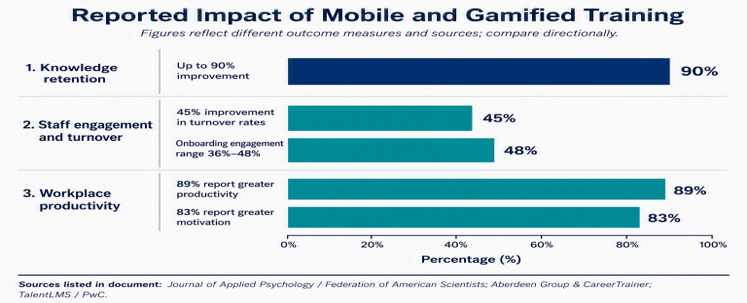
Why Mobile + Short Interactions (Microlearning) Drive This ROI
The ROI is structurally achieved because micro-interactions combat the psychological "forgetting curve". Instead of pulling frontline staff away from their duties for a 4-hour lecture (which incurs high operational costs and low retention), mobile apps push 3-to-5-minute daily gamified challenges. This promotes spaced repetition, forcing the brain to repeatedly retrieve and solidify information without introducing "training fatigue".
